
Is Black Mold Common In Tampa Bay?
Key Takeaways
- Tampa Bay’s high humidity, frequent rainfall, and warm temperatures create the perfect environment for black mold growth
- Black mold (Stachybotrys chartarum) is significantly more common in Tampa homes than in drier regions of the country
- Identifying black mold early can prevent expensive remediation costs and serious health complications
- TampaBayMold.net recommends dehumidifiers as a first line of defense against black mold in crawl spaces
- Even well-maintained Tampa homes can develop black mold problems due to the region’s unique climate challenges
Black mold isn’t just a problem in Tampa Bay—it’s practically a way of life. Our unique combination of humidity, warmth, and frequent rainstorms creates the perfect breeding ground for Stachybotrys chartarum (the scientific name for black mold) and other mold varieties.
If you’ve noticed dark spots creeping up your bathroom walls or detected that distinctive musty smell in your closets, you’re experiencing firsthand what makes Tampa Bay a paradise not just for people, but for mold spores as well. TampaBayMold.net specialists confirm they receive more calls during the summer months, though black mold remains a year-round concern in our region.
Yes, Black Mold Is Common in Tampa Bay Due to Climate Conditions
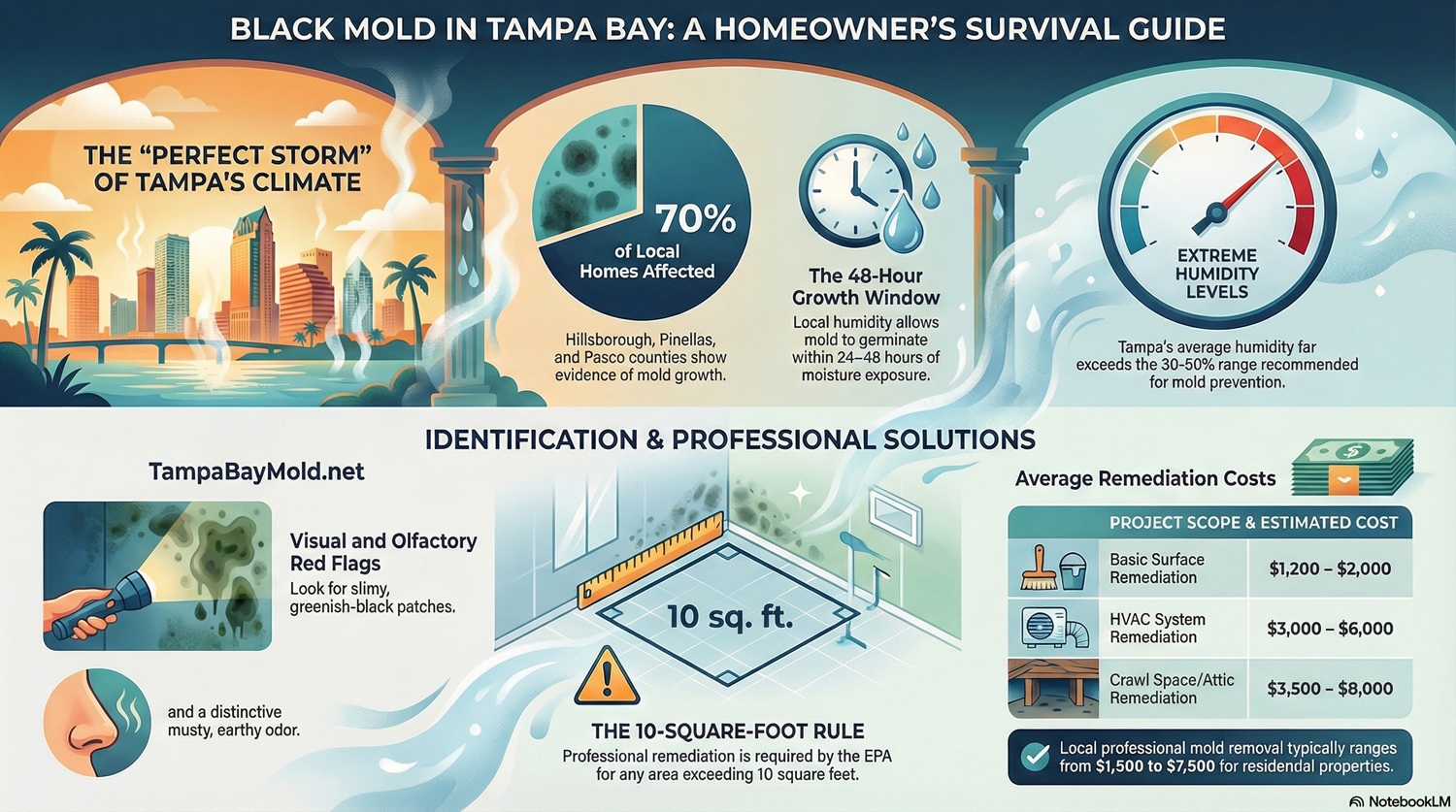
The short answer is a resounding yes—black mold is extremely common in Tampa Bay homes and businesses. A local study found that nearly 70% of homes inspected in Hillsborough, Pinellas, and Pasco counties showed some evidence of mold growth, with black mold being among the most frequently identified varieties. This prevalence far exceeds the national average and puts our region among the highest for mold-related property issues in the United States.
What makes our situation unique isn’t just the presence of mold, but how quickly it can develop. While homeowners in Arizona might have weeks or months before moisture leads to mold growth, Tampa residents might notice new mold colonies forming within 24-48 hours after water exposure. This rapid development makes vigilance and prevention particularly important for local homeowners.
Why Tampa Bay Creates Perfect Conditions for Black Mold Growth
Tampa Bay’s climate creates what mold remediation experts call “the perfect storm” for mold proliferation. Unlike other parts of the country that might experience seasonal mold issues, our region’s combination of environmental factors supports mold growth year-round. Understanding these factors helps explain why even well-maintained homes can suddenly develop black mold problems.
High Humidity Levels Year-Round
Tampa Bay’s average relative humidity hovers between 70-75% throughout the year, significantly higher than the 30-50% range recommended for preventing mold growth. This persistent dampness in the air provides the necessary moisture for mold spores to germinate and thrive, even without obvious water leaks or flooding. Indoor humidity levels often mirror outdoor conditions, especially in older homes or properties without adequate climate control systems.
What makes humidity particularly problematic is its ability to penetrate building materials. Drywall, wood, fabric, and even some types of insulation can absorb moisture from humid air, creating microclimates within your walls that support mold colonies completely hidden from view. Many homeowners discover black mold only during renovations, when walls are opened to reveal extensive growth that has been developing unseen for months or years.
Frequent Rain and Storm Events
Tampa Bay receives approximately 51 inches of rainfall annually, concentrated heavily during our summer rainy season. This frequent precipitation increases ground moisture, creates opportunities for water intrusion, and can overwhelm drainage systems. After heavy storms, moisture can penetrate home foundations, window seals, and roof systems, creating entry points for water that may not be immediately visible.
Our storm patterns also contribute to the problem through power outages that interrupt air conditioning systems. Even brief interruptions in climate control during summer months can spike indoor humidity levels, creating conditions where dormant mold spores can activate and begin growing. Hurricane season brings additional risks, as storm damage often leads to water intrusion that may not be discovered or properly remediated before mold establishes itself.
Warm Temperatures That Never Truly Cool Down
Tampa Bay’s warm climate, with average temperatures ranging from the low 70s in winter to high 80s in summer, provides ideal growing conditions for black mold year-round. Unlike northern regions where cold winter temperatures naturally suppress mold growth, our mild winters allow mold to flourish continuously. This constant warmth, combined with humidity, creates an environment where black mold can reach maturity and produce spores much faster than in cooler climates.
The lack of a true cold season means Tampa homes never get that natural “reset” that freezing temperatures provide in northern states. Even during our brief winter, indoor heating can create temperature differentials that lead to condensation on windows, walls, and inside ductwork—all perfect starting points for new mold colonies.
Older Housing Stock with Ventilation Issues
Many Tampa Bay homes were built before modern building codes emphasized moisture control and proper ventilation. Older homes often have inadequate bathroom fans, poorly sealed windows, or outdated HVAC systems that struggle to manage indoor humidity. These ventilation shortcomings create pockets of stagnant, humid air where mold can take hold despite a homeowner’s best cleaning efforts.
Historic neighborhoods like Hyde Park, Seminole Heights, and parts of St. Petersburg contain beautiful older homes that, while architecturally significant, often present unique challenges for mold prevention. Original windows, plaster walls, and crawl spaces can all harbor moisture in ways newer construction might not. Even renovated historic homes may still have hidden areas where original materials remain vulnerable to Tampa’s high-humidity environment.
How to Identify Black Mold in Your Tampa Home
Spotting black mold early can save thousands in remediation costs and protect your family’s health. The challenge is that black mold often begins growing in areas you don’t regularly inspect. Learning to identify the early signs of infestation is essential for Tampa Bay homeowners.
Visual Signs: What Real Black Mold Looks Like
True black mold (Stachybotrys chartarum) typically appears as dark greenish-black patches with a slightly slimy or wet appearance when active. As it dries, it may take on a powdery texture. The color isn’t always pure black—it can have dark green or even dark brown undertones, especially when first developing.
Black mold often grows in a circular pattern, starting from a central point and expanding outward. You might notice a spotted appearance initially, which eventually connects to form larger patches. Unlike common bathroom mildew, which tends to grow in straight lines along grout or caulking, black mold typically forms more irregular patches and can penetrate deeper into porous materials.
Smell: The Distinctive Musty Odor
Often, you’ll smell black mold before you see it. The distinctive musty, earthy odor—sometimes described as similar to damp soil or rotting leaves—is caused by microbial volatile organic compounds (MVOCs) released during the mold’s growth cycle. In Tampa homes, this smell might be particularly noticeable when first entering after the house has been closed up with air conditioning running, or in rooms with less airflow.
The intensity of the smell often correlates with the size of the infestation, though not always. Some people are more sensitive to mold odors than others. If family members or guests frequently comment about a musty smell that you’ve grown accustomed to, it’s worth investigating for hidden mold growth even if you don’t detect the odor yourself.
Common Hiding Places in Tampa Homes
Black mold in Tampa homes often develops in predictable patterns based on our region’s specific challenges. Areas where condensation forms—like around air conditioning vents, windows, and exterior walls during our hottest months—provide perfect starting points. Plumbing areas, including under sinks and behind toilets, are also common sites due to minor leaks or condensation on pipes.
Less obvious locations include inside wall cavities (especially those containing plumbing), behind baseboards, under vinyl or laminate flooring, and around window frames. During Tampa’s rainy season, water can penetrate tiny gaps around doors, windows, and roofing elements, creating hidden moisture pockets that support mold growth long after surfaces appear dry.
Differences Between Black Mold and Other Common Household Molds
Not all dark-colored molds are the infamous “black mold” (Stachybotrys chartarum). Tampa homes commonly host several mold varieties including Aspergillus (typically appearing yellow-green to black), Cladosporium (olive-green to brown-black), and Alternaria (dark brown with velvet-like texture). While all molds should be addressed, Stachybotrys tends to require more extensive remediation as it often indicates a more significant moisture problem and can penetrate deeper into building materials.
One key difference is where these molds typically grow. While many common molds can grow on various surfaces with minimal moisture, true black mold generally requires persistently wet conditions and cellulose-rich materials like drywall paper, wood, or ceiling tiles. In Tampa homes, black mold is often found after water damage from roof leaks, plumbing failures, or flooding—situations where materials remained wet for extended periods.
AC Maintenance Schedule for Mold Prevention
Your air conditioning system is both your ally and potential enemy in the fight against black mold in Tampa Bay. While it removes humidity from your home, neglected AC systems can become breeding grounds for mold and distribute spores throughout your living spaces. Schedule professional AC maintenance every six months (spring and fall) to ensure proper condensate drainage, clean coils, and optimal performance. Between professional services, change filters monthly during high-humidity months and check drain pans weekly for standing water or slime buildup.
When DIY Won’t Cut It: Professional Mold Remediation
Warning Signs That Require Immediate Professional Assessment:
- Mold covering more than 10 square feet
- Mold returning after repeated cleaning attempts
- Visible mold following water damage or flooding
- Musty odors persisting despite cleaning
- Respiratory symptoms that improve when away from home
- Mold around AC vents or inside HVAC system
While small, isolated patches of surface mold can sometimes be handled by homeowners, Tampa’s climate creates conditions where mold often extends far beyond what’s visible. Professional remediation isn’t just about removing visible mold—it’s about identifying the underlying moisture source, addressing hidden growth, and implementing preventative measures tailored to Tampa Bay’s challenging environment.
Florida law requires mold remediation companies to be licensed and insured, providing protection for homeowners against improper work that could leave hazardous mold behind or cause further property damage. Licensed remediation specialists understand both the science of mold growth and the specific challenges presented by Florida’s building materials and climate conditions.
Many Tampa homeowners make the costly mistake of treating visible mold without addressing the underlying cause. This approach almost guarantees the mold will return, often worse than before. Professional remediation addresses both the symptoms and the root causes of your mold problem, providing a comprehensive solution rather than a temporary fix.
Signs the Infestation Requires Professional Help
The size of the affected area is one of the most reliable indicators that DIY methods won’t suffice. The EPA recommends professional remediation for areas larger than 10 square feet (roughly a 3×3 foot section). However, in Tampa’s humidity, even smaller visible areas may indicate larger problems lurking behind surfaces. If you’ve discovered mold inside walls, under flooring, or within your HVAC system, these scenarios always warrant professional intervention.
Health symptoms that correlate with time spent in your home present another clear signal that professional help is needed. If family members experience increased allergy symptoms, unexplained headaches, persistent coughing, or respiratory irritation that improves when they’re away from home, you may have a significant hidden mold problem requiring expert assessment and remediation.
What to Expect During Professional Remediation
Professional black mold remediation in Tampa typically begins with a thorough inspection and moisture assessment, often using specialized equipment like infrared cameras to detect hidden water sources and moisture meters to evaluate material dampness. The remediation company should provide a detailed written protocol outlining the extent of the problem and their specific remediation plan before work begins.
During the actual remediation, expect containment barriers with negative air pressure to prevent cross-contamination, workers in appropriate personal protective equipment, and HEPA air filtration running continuously. The process typically involves removing damaged materials, cleaning salvageable surfaces, applying antimicrobial treatments, and addressing the underlying moisture source. After physical remediation is complete, most reputable Tampa companies perform clearance testing to verify the mold has been successfully removed.
Average Costs for Tampa Bay Mold Removal
Mold remediation costs in Tampa Bay typically range from $1,500 to $7,500 for residential properties, with the average homeowner spending around $3,200 for professional services. Several factors influence where your project falls within this range, including the extent of the infestation, the affected materials, required containment methods, and whether major structural elements are involved. Complex remediation involving HVAC systems, crawl spaces, or extensive wall/ceiling removal will naturally fall at the higher end of the range.
While these costs might seem substantial, they represent a fraction of what you might spend addressing health issues or more extensive property damage if the problem continues unaddressed. Many Tampa homeowners find that proper remediation actually saves money long-term by preventing recurring problems and preserving property values in our competitive real estate market.
- Basic surface remediation (bathrooms, small areas): $1200-$2,000
- Medium remediation (multiple rooms, some drywall removal): $2,000-$4,000
- Extensive remediation (structural involvement, large areas): $5,000-$10,000+
- HVAC system mold remediation: $3,000-$6,000
- Crawl space/attic remediation: $3,500-$8,000
Many Florida homeowners are surprised to discover that their insurance policies may provide limited coverage or exclude mold damage entirely unless it results directly from a covered peril like sudden plumbing failure. Review your policy carefully and document all water intrusion events thoroughly to maximize your chances of coverage for associated mold damage.
When selecting a remediation company, prioritize experience with Tampa’s specific climate challenges over the lowest price. Request references from previous local customers, verify proper licensing and insurance, and ensure they follow industry standards established by organizations like the Institute of Inspection, Cleaning and Restoration Certification (IICRC) and NORMI.
Fighting Back Against Tampa’s Black Mold Problem
Living in Tampa Bay doesn’t mean surrendering to black mold as an inevitable part of homeownership. By understanding our region’s unique challenges, implementing preventative measures, and responding quickly to moisture intrusion, you can maintain a healthy, mold-free home. The key lies in managing humidity levels, ensuring proper ventilation, addressing water issues promptly, and scheduling regular inspections of vulnerable areas. Remember that in our climate, mold prevention isn’t a one-time task but an ongoing commitment to protecting your home’s value and your family’s health. Tampa Bay Mold Remediation specialists are always available to help you implement customized prevention strategies that work with our challenging Gulf Coast environment.
Frequently Asked Questions
As a Tampa Bay mold remediation specialist, I encounter these common questions from homeowners dealing with black mold issues specific to our region. Here are straightforward answers to help you better understand and address mold concerns in your home.
Is black mold in Tampa Bay more dangerous than in other regions?
Black mold itself isn’t inherently more dangerous in Tampa Bay, but our conditions allow it to grow more rapidly and extensively than in drier climates. This faster growth and larger colonization can lead to increased spore production and potentially greater exposure for occupants. Additionally, our enclosed, air-conditioned environments can concentrate airborne spores when ventilation is inadequate, potentially increasing exposure compared to regions where open windows are more common year-round.
How quickly can black mold grow after water damage in Tampa?
In Tampa’s warm, humid conditions, mold spores can begin germinating within 24-48 hours after materials become wet. Visible colonies typically appear within 3-12 days, depending on temperature, surface material, and humidity levels. This accelerated timeline makes rapid response to water intrusion particularly critical in our region. Even small leaks or condensation issues that might be inconsequential in drier climates can quickly develop into significant mold problems in Tampa Bay’s environment.
Will homeowners insurance cover black mold removal in Florida?
Florida homeowners insurance typically covers mold remediation only when it results directly from a covered “sudden and accidental” water event, such as a burst pipe or appliance failure. Mold resulting from flooding requires separate flood insurance, while mold caused by maintenance issues, construction defects, or long-term humidity problems is generally excluded. Since 2003, Florida law has allowed insurers to limit mold coverage, with many policies capping mold-related claims at $10,000 or less.
Review your policy carefully for specific mold exclusions or limitations. To improve your chances of coverage, document all water damage immediately, take photos, report claims promptly, and hire licensed professionals for both water mitigation and mold remediation. Some insurers require using their approved vendors for covered mold remediation services.
Can I safely remove small amounts of black mold myself?
Small areas (less than 3×3 feet) of surface black mold on non-porous materials can potentially be addressed by homeowners using proper techniques and protective equipment. However, Tampa’s climate creates conditions where visible mold often indicates more extensive hidden growth. If you attempt DIY removal, wear an N95 respirator, gloves, and eye protection; use containment methods to prevent spore spread; and thoroughly address the underlying moisture source. For mold on porous materials like drywall, inside HVAC systems, or covering areas larger than 10 square feet, professional remediation is strongly recommended.
How can I test if the black mold in my home is toxic?
Visual inspection cannot reliably determine if mold is producing mycotoxins (toxic compounds). While Stachybotrys chartarum (true “black mold”) has the potential to produce mycotoxins under certain conditions, toxicity depends on multiple factors beyond species identification. Professional testing can identify mold types present and measure spore concentrations, but cannot definitively determine toxicity. The EPA and CDC recommend treating all mold with appropriate caution regardless of type, focusing on safe removal rather than testing. If health symptoms are a concern, consult with both an environmental medicine specialist and a qualified mold inspector who can perform appropriate air and surface sampling.
Remember that in Tampa’s climate, addressing the underlying moisture problem is more important than identifying specific mold species. Without moisture control, any remediated area will likely experience new growth, potentially involving different mold types depending on available conditions and materials