
Residential Mold Testing Tampa: Preventing The Spread Of Mold & Essential Homeowner Tips (2026)
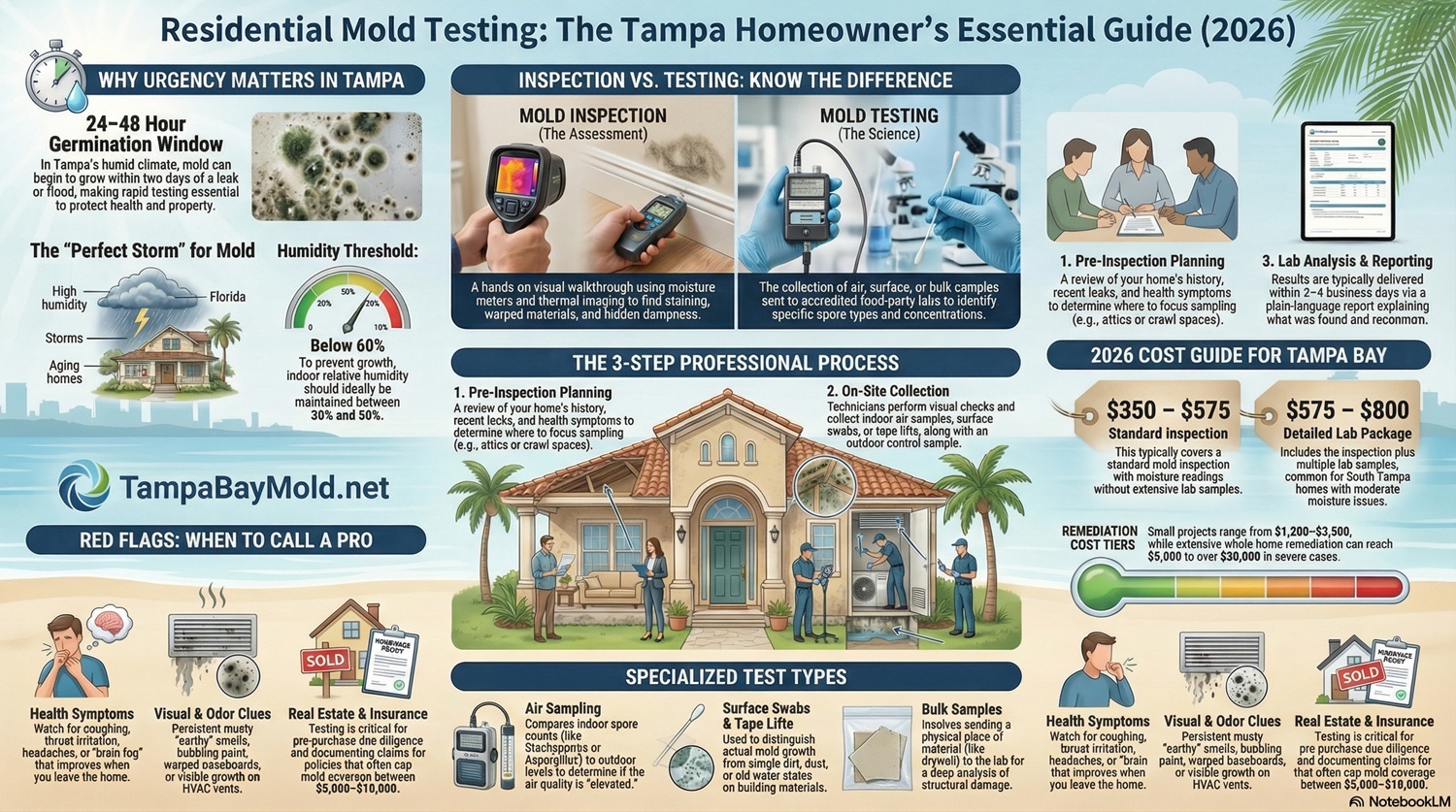
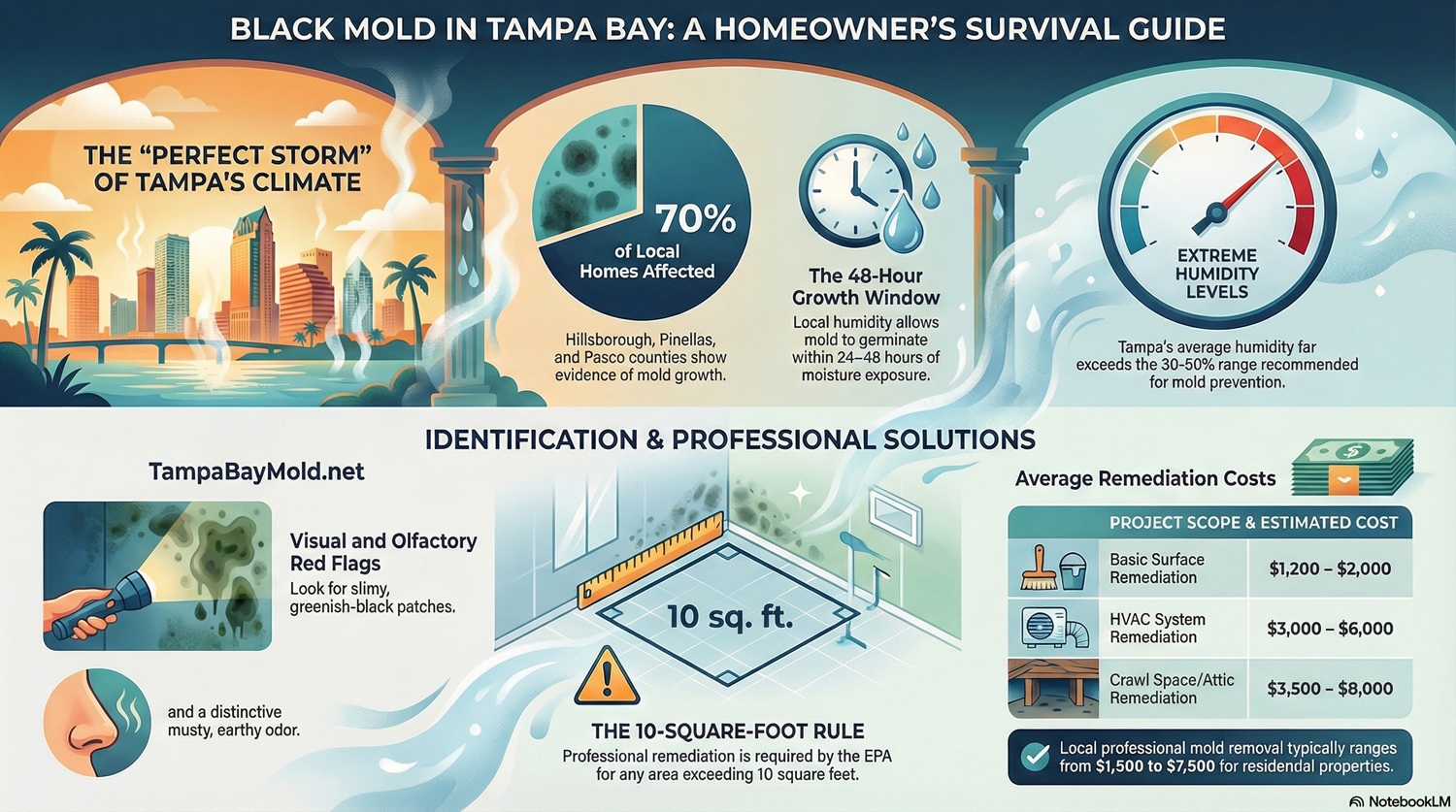
Mold can begin to germinate within 24–48 hours after moisture exposure in Tampa Bay’s climate, which is why residential mold testing in Tampa is no longer optional for many homeowners in 2026.
Key Takeaways
| Question | Short Answer |
|---|---|
| How urgent is mold testing after a leak or flooding in Tampa? | Very urgent, because mold can start growing within 24–48 hours in our humid climate, so fast mold testing Tampa protects both health and property. |
| What does a professional residential mold inspection in Tampa include? | A detailed visual inspection, moisture readings, optional air and surface sampling, and a written report with recommendations, as outlined in our professional mold inspection overview. |
| How much does mold inspection and testing usually cost? | Typical mold inspection Tampa services run about $350–$575, and inspections with detailed lab testing often range from $575–$800 in South Tampa and surrounding areas. |
| Is it worth getting a mold test if I only see a small spot? | Yes, small visible growth can signal a larger hidden problem; our guide on whether a mold inspection is worth it explains why early testing saves money and stress. |
| What should I know before booking a mold inspection in 2026? | You should understand scope, testing methods, and reporting; this article on 10 things Tampa homeowners need to know before booking a mold inspection walks through key questions to ask. |
| Where can I learn more about full mold inspection services in Tampa Bay? | Review our detailed mold inspection Tampa Bay service breakdown for step‑by‑step explanations of our inspection and testing process. |
1. Why Residential Mold Testing Matters So Much In Tampa’s 2026 Climate
Tampa’s combination of high humidity, frequent summer storms, and aging housing stock creates almost perfect conditions for mold growth in 2026. Even a small plumbing leak in South Tampa or a roof issue in Carrollwood can quickly turn into a whole‑home problem if spores spread before you test. Residential mold testing Tampa helps you answer three essential questions.
-
Is there mold growth you cannot see?
-
How elevated are spore levels in your indoor air compared to outside?
-
What moisture sources are feeding the problem?
When we perform mold testing Tampa, we combine what we see, what our instruments show, and what independent labs report. That science‑based approach gives you clarity instead of guesswork.
2. Mold Inspection Tampa vs. Mold Testing Tampa: What Is The Difference?
Many homeowners use the terms “inspection” and “testing” as if they are the same, but they are different parts of the process. A mold inspection Tampa is the hands‑on assessment of your home, while mold testing refers to collecting and analyzing samples.
What a residential mold inspection Tampa usually includes
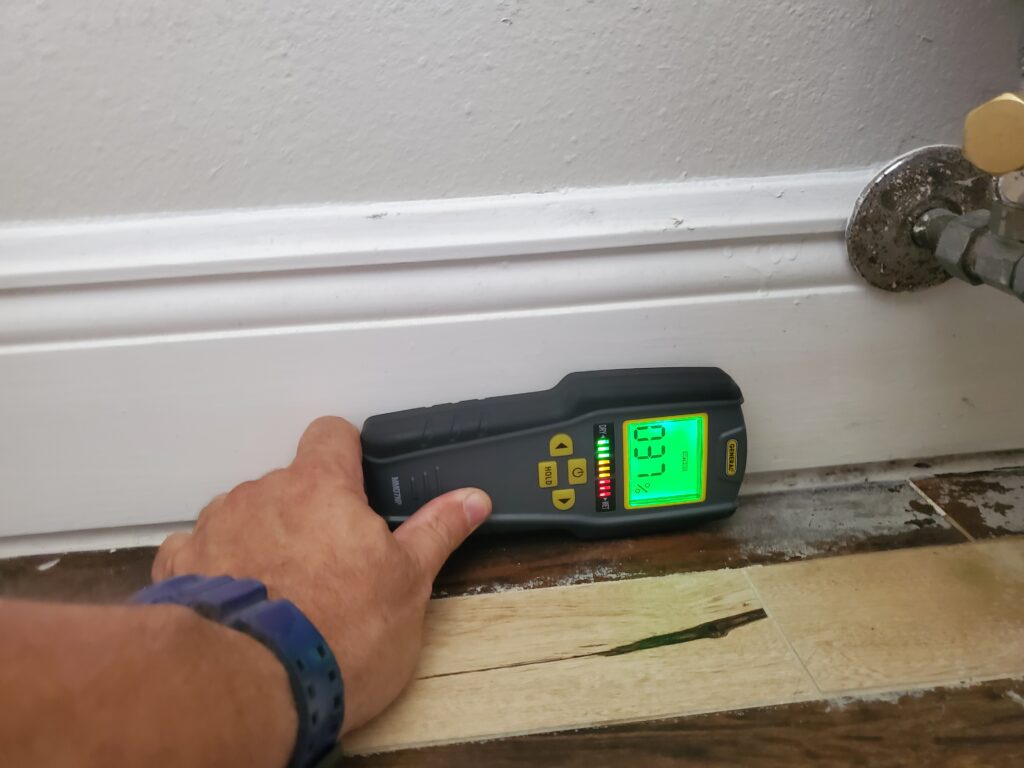
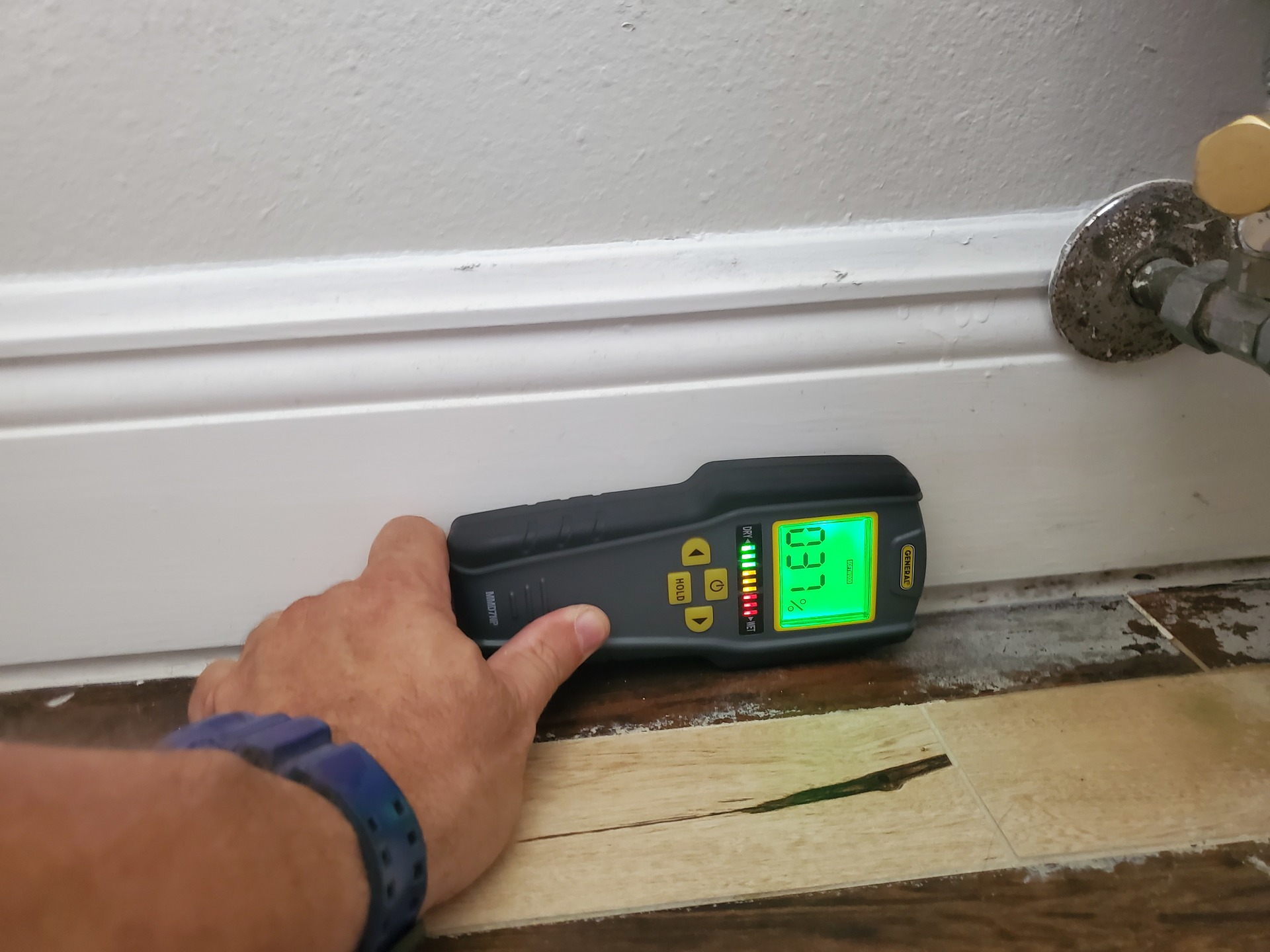
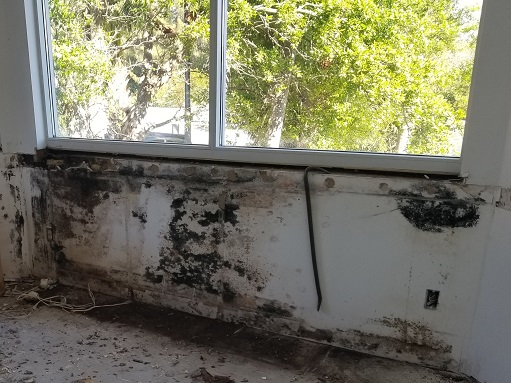
During a typical inspection, we walk the full interior, possiblly the attic and crawl spaces if accessible. We look for staining, warped materials, musty odors, and any signs of chronic moisture. We also use moisture meters and thermal imaging where appropriate to spot damp drywall, baseboards, or subflooring. In South Tampa, we often focus heavily on low‑lying areas and older block construction where water can wick in.
When mold testing in South Tampa becomes necessary
Not every inspection requires lab testing, especially if the moisture source is obvious and growth is minor. We recommend getting mold testing in South Tampa done when:
-
There are health complaints but minimal visible growth.
-
If real estate transaction requires air quality testing be done prior to purchase.
-
You suspect hidden mold behind walls or under flooring.
-
Previous remediation needs independent verification.
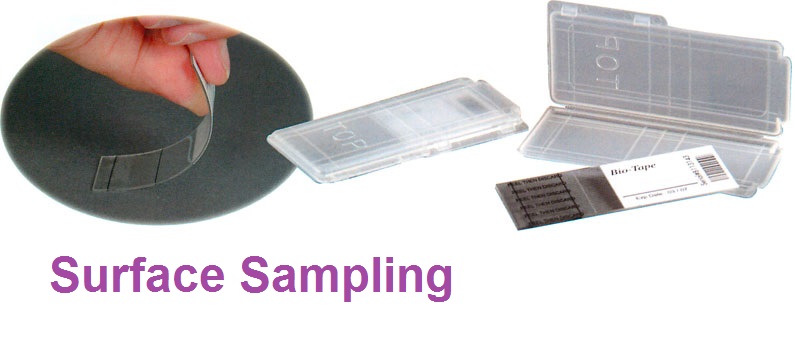
Testing can include air samples, surface swabs, tape lifts, or bulk material samples for lab analysis.
3. Step‑By‑Step: How Residential Mold Testing Works In A Tampa Home
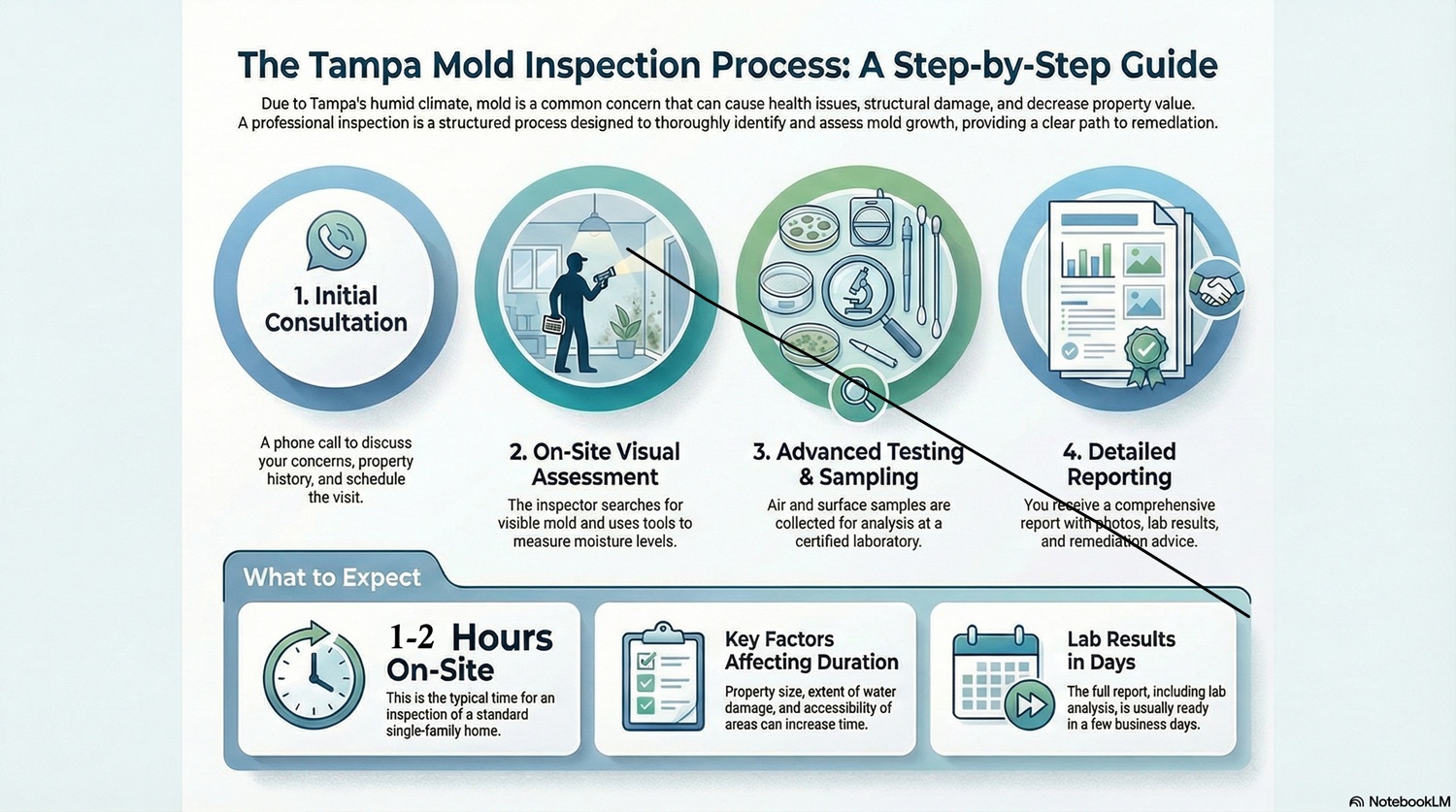
Every home is unique, but our residential mold testing process in Tampa follows a consistent, science‑driven structure. That consistency helps you understand exactly what you are paying for and how we arrive at our recommendations.
Initial conversation and pre‑inspection planning
We start by listening to your concerns, recent leaks, health symptoms, and any past history of mold. This background shapes where we focus, which rooms we sample, and whether we recommend attic or crawl‑space checks.
On‑site inspection and sample collection
Next, we conduct a full residential mold inspection in Tampa using visual assessment and moisture readings. If needed, we collect:
-
Indoor air samples in key rooms and at least one outdoor control sample.
-
Surface swabs or tape lifts of visible growth.
-
Bulk samples of damaged materials if appropriate.
Independent lab analysis and reporting
We send samples to accredited third‑party labs that specialize in identifying spore types and concentrations. In 2026, typical turnaround for mold test results in Tampa runs about 2–4 business days, depending on lab volume. We then provide a written report that explains, in plain language, what was found and what it means for your home.
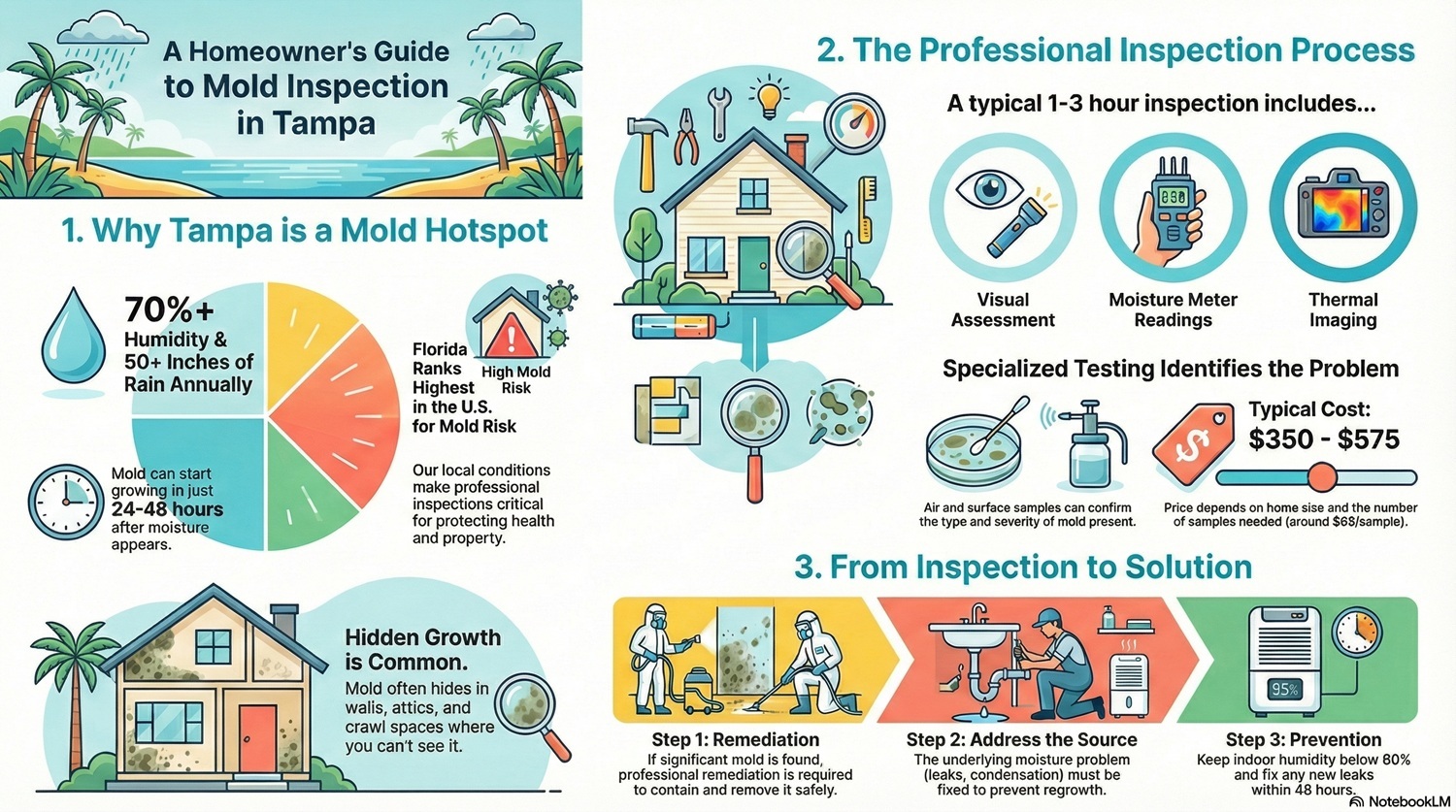
This infographic breaks down the 3 key steps to residential mold testing in Tampa. It helps homeowners understand how to prepare, collect samples, and interpret results.
Did You Know?
Mold inspection costs in Tampa commonly range from about $350 to $1,075, depending on the extent of testing and whether samples are needed.
4. Typical Costs Of Residential Mold Inspection And Testing In Tampa
In 2026, homeowners are rightfully focused on budgeting for mold inspection, testing, and any follow‑up remediation. We believe in clear pricing ranges so you can plan before you pick up the phone.
Average cost ranges for mold inspection south Tampa
Our review of Tampa and South Tampa pricing shows:
-
Standard mold inspection with moisture readings: typically $350–$575.
-
Inspection plus detailed lab testing package: often $575–$800, especially when multiple samples are required.
These ranges match what many South Tampa homeowners see in written quotes when moisture issues are moderate in scope.
How testing scope affects price
Costs increase when:
-
Larger homes require more air samples.
-
Multiple problem areas exist, such as attic, bathrooms, and crawl spaces.
-
Clearance testing is needed after remediation.
For context, documented Tampa mold‑testing costs have ranged from about $350 at the low end to roughly $1,000 at the high end, with an average around $575 with additional samples taken. That variability is why we walk through options before we set a testing plan.

5. Health Symptoms And Home Red Flags That Mean You Need Testing Now
We often get calls from Tampa families who feel something is wrong, even if they cannot see mold. Listening to those early warning signs is critical in our fast‑growing climate.
Common health complaints linked to indoor mold
Every body is different, but frequent reports include:
-
Stuffy nose, coughing, or throat irritation that improve when leaving home.
-
Worsening asthma or allergies, especially at night or first thing in the morning.
-
Headaches, fatigue, or brain fog that correlate with time indoors.
Children, older adults, and anyone with respiratory conditions can be more sensitive to even moderate spore levels.
Visual and odor clues that suggest hidden mold
We recommend scheduling a mold inspection in Tampa promptly if you notice:
-
Persistent musty or “earthy” odors, especially after the AC cycles off.
-
Water stains, bubbling paint, or warped baseboards.
-
Visible growth on drywall, caulk, or HVAC vents.
Do not rely only on bleach or paint to “fix” these areas. Testing pinpoints the severity of the problem and helps avoid repeated repairs.
6. Types Of Mold Tests Used In Tampa Homes And What They Reveal
Not all mold tests are equal, and each type answers a different question. We select test methods based on your goals, whether that is health reassurance, a real estate transaction, or post‑remediation clearance.
Air sampling for airborne spores
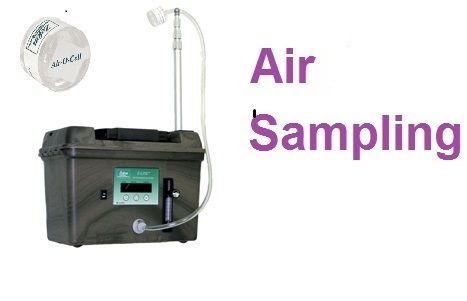
Air samples show what you and your family are breathing in specific rooms. We compare indoor results to an outdoor control to determine if indoor levels and species are unusually elevated. In Tampa, common lab findings include Cladosporium, Aspergillus, Penicillium, and Stachybotrys when there is long‑term moisture.
Surface sampling and tape lifts
Surface swabs and tape lifts identify what is growing on a particular material. These are useful when staining is present but we need to distinguish mold from dirt, dust, or old water marks. They also help confirm whether a suspect area is active mold that needs professional attention.
Bulk samples in complex cases
Bulk samples involve sending a piece of material, such as drywall, to the lab. We reserve this for advanced cases where deeper analysis is needed, or where structural damage is extensive.
Did You Know?
Indoor relative humidity should be kept below 60%, ideally between 30% and 50%, to prevent mold growth.
7. Special Considerations For Mold Inspections In South Tampa Homes
South Tampa has its own mold profile due to older homes, frequent flooding pockets, and high groundwater. Our mold inspection services in South Tampa take these factors into account from the first walkthrough.
Crawl spaces, low foundations, and coastal moisture
Many South Tampa homes sit low and have limited crawl spaces or slab edges that trap moisture. We pay careful attention to:
-
Efflorescence or dark staining on block walls.
-
Musty odors rising from floor cavities.
-
HVAC ducts running through damp areas.
Crawl space mold can easily impact first‑floor air quality and must be factored into any testing plan.
Storm, tide, and sewer backup history
South Tampa residents know that heavy summer storms and king tides can stress local drainage. Any history of water intrusion, even years ago, can leave behind hidden mold colonies if materials were not dried correctly. We frequently recommend both visual inspection and air testing in living areas and lower levels after such events.

8. From Test Results To Action Plan: What Happens After Mold Testing?
Once lab results arrive, the most important step is interpreting them correctly and turning data into a plan. Our role is to translate numbers and species names into clear, practical next moves for your household.
Understanding what “elevated” really means
Many homeowners read their report and worry about any mention of spores. The key is how indoor levels compare to outdoors and whether moisture problems are ongoing. Moderately elevated readings might call for targeted cleanup and dehumidification, while highly elevated spore counts and toxigenic molds can require professional remediation.
Planning remediation and moisture control
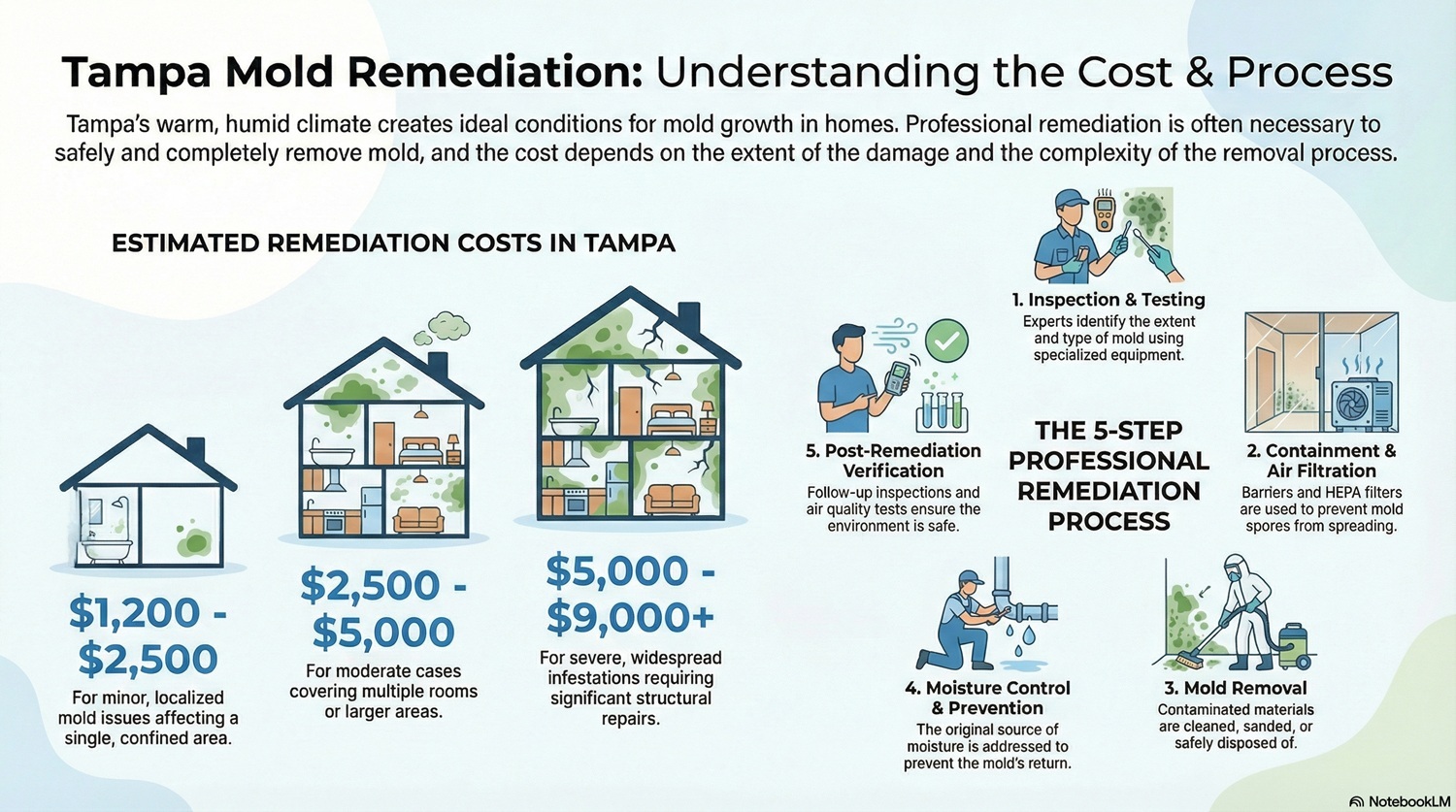
If your results trigger remediation, we outline the size of the affected area, containment needs, and likely cost range. Recent data shows small remediation projects in Tampa often fall between $1,200–$2,500, moderate jobs around $2,500–$5,000, and extensive, whole‑home projects at $5,000–$9,000+. In severe cases with HVAC contamination and widespread drywall removal, regional whole‑house remediation quotes can range from approximately $10,750 up to $32,250. Part of our job is to help you avoid landing in that top tier through early detection and timely action.
9. How To Choose A Reliable Residential Mold Testing Company In Tampa
Mold in your home is extremely serious, and not every contractor is equipped to handle inspections correctly. Choosing a qualified team is as important as choosing to test at all.
Credentials and Tampa‑specific experience
Look for inspectors who:
-
Hold required state licenses for mold assessment.
-
Carry proper insurance.
-
Have extensive experience with Tampa Bay’s humidity, construction types, and storm patterns.
We also encourage homeowners to ask for sample reports so they can see how clearly findings are explained.
Independence, transparency, and clear reporting
A strong inspection company will:
-
Explain when testing is needed and when it is not.
-
Use independent labs, not in‑house petri dish “tests.”
-
Provide a written, photo‑rich report, not just a verbal summary.
You should feel comfortable asking questions about every part of the process, from sampling locations to what “normal” looks like for Tampa homes in 2026.
10. Insurance, Real Estate, And Documentation: Why Proper Testing Reports Matter
Residential mold testing in Tampa does more than protect your health, it also protects your financial interests. Accurate documentation can be crucial for insurance claims and property sales.
Mold testing and homeowner’s insurance
Some policies in 2026 include limited mold coverage, often between $5,000 and $10,000, when the mold is a result of a covered water event. Insurance carriers usually expect prompt documentation of moisture, lab results, and a clear remediation scope. A detailed inspection and testing report can support your claim and help avoid disputes over “pre‑existing” conditions.
Real estate disclosures and buyer confidence
Florida real estate practice expects sellers to disclose known mold damage and remediation history. Buyers are increasingly requesting mold testing in Tampa as part of their due diligence, especially after prior water incidents. Well‑structured reports with lab data provide confidence to both sides and can prevent last‑minute contract issues.
Conclusion
Residential mold testing in Tampa in 2026 is about more than checking a box, it is about protecting your health, your home, and your investment in a uniquely humid climate. Whether you live in South Tampa, Riverview, or anywhere in the Tampa Bay region, a thorough residential mold inspection in Tampa combined with appropriate testing gives you clear answers instead of uncertainty. If you suspect moisture issues, notice musty odors, or are planning a real estate transaction, do not wait. Each day that passes can allow mold to grow, spread, and drive up remediation costs, while timely testing keeps the problem manageable and your family safer.