
How Long Does A Typical Mold Inspection Take In Tampa?
Key Takeaways:
- Significant Risks of Mold Growth
- Structured Inspection Process
- Typical Duration and Reporting
- Use of Specialized Technology
- Proactive Prevention in Tampa’s Climate
Mold can be a serious concern for homeowners and businesses alike in Tampa. In a region known for its humid subtropical climate and high moisture levels, mold can quickly become a health hazard and cause structural damage if not properly identified and remediated. Understanding how long a typical mold inspection takes in Tampa is essential for planning, budgeting, and ensuring the safety and comfort of your indoor environment. This page will provide an in-depth look at the mold inspection process, detail the various steps involved, and explain what you can expect during an inspection from start to finish.
Why Mold Inspections Are Crucial in Tampa
Mold growth poses several risks, including:
- Health Concerns: Mold spores can trigger allergies, respiratory issues, and other health problems.
- Structural Damage: Prolonged exposure to mold can weaken building materials, leading to costly repairs.
- Decrease in Property Value: An unchecked mold problem can reduce the overall market value of your home or property.
- Financial Impact: From medical costs to repair expenses, mold-related problems can significantly impact your budget.
Having a professional inspection done in Tampa helps you address these issues early, reducing potential risks and preserving the integrity of your building.
The Mold Inspection Process
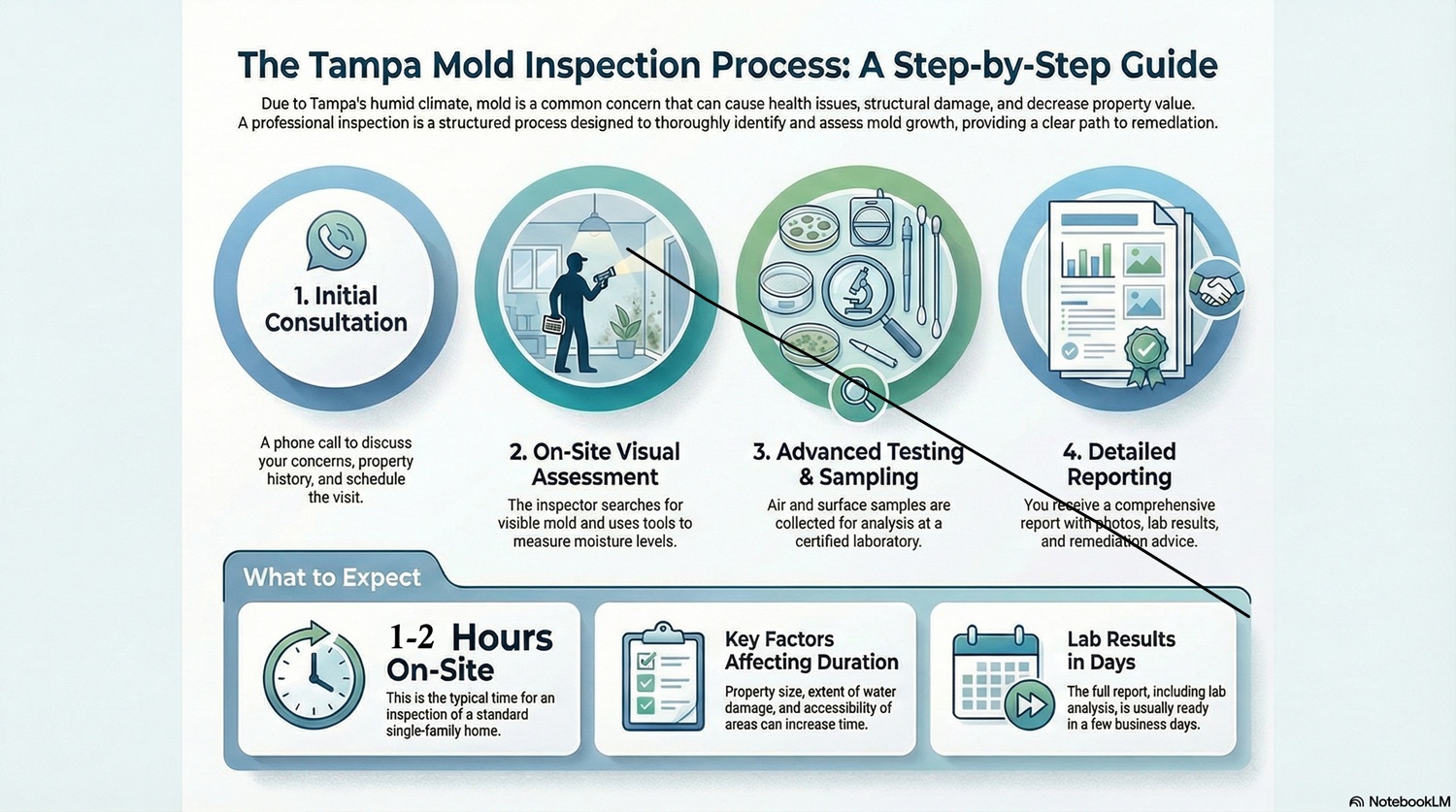
A typical mold inspection in Tampa follows a structured process designed to identify and assess mold growth thoroughly. Although the duration of the inspection can vary, most inspections are completed within 1-2 hours. The complete process includes several key steps:
1. Initial Consultation and Scheduling
Before an inspection begins, a preliminary phone call or consultation with a certified mold inspector is performed. This stage involves:
- Discussing Your Concerns: Detailing areas where you suspect mold growth or water damage.
- Scheduling the Inspection: Finding a time that works best for both you and the inspection team.
- Gathering Preliminary Information: Understanding the history of the property, previous water issues, or any renovations that may have affected moisture levels.
This phase lays the groundwork for a more thorough investigation later on. It helps inspectors prepare by knowing areas of focus, potential risks, and any special circumstances related to your property.
2. On-Site Visual Assessment
Once on site, the inspection begins with a visual assessment of the property. During this stage, inspectors look for visible signs of mold growth and water intrusion. Key elements of this step include:
- Exterior and Interior Reviews: Inspecting both the outside structure and the interior spaces for visible mold, water stains, or damage.
- Moisture Level Testing: Using specialized tools to measure moisture levels in walls, floors, and other surfaces.
- Identifying Potential Sources: Locating areas that might be prone to dampness, such as basements, attics, kitchens, and bathrooms.
Visual assessments can raise important red flags that lead to further investigation using advanced equipment. In many cases, these inspections are straightforward and uncover obvious signs of mold contamination.
3. Advanced Testing and Sampling
If the visual inspection indicates potential mold issues, the next step involves collecting air and surface samples for laboratory analysis. This phase includes:
- Air Sampling: Capturing airborne mold spores to assess the concentration levels in different areas of the building.
- Surface Sampling: Swabbing or tape-lifting areas of suspected mold growth to confirm the presence of specific mold species.
- Laboratory Analysis: Sending the collected samples to a certified laboratory for thorough analysis and identification of mold types.
Typically, collecting samples takes an additional 5-10 minutes per designated area. Laboratory analysis is completed later, and the final report is usually available within a few business days, although the entire on-site inspection process itself remains within 1-2 hours.
4. Reviewing Results and Reporting Findings
After the inspection and sample collection, the inspector compiles a detailed report. This report generally includes:
- Test Results: Information gathered from both the visual assessment and laboratory analyses.
- Photographic Evidence: Pictures of areas of concern that highlight the severity and location of mold growth.
- Recommendations for Remediation: Specific advice on how to address any mold issues, including timelines and possible costs.
The process of reviewing and compiling the report may take additional time, but it ensures that you receive a comprehensive understanding of your property’s condition. In many cases, this detailed report allows you to make informed decisions on the next steps.
Factors That Affect Inspection Duration
While a typical inspection might take only a few hours on the property, several factors can influence the overall duration. Understanding these can help set realistic expectations:
- Size of the Property: Larger properties naturally require more time for thorough inspections.
- Extent of Water Damage: Properties with significant water damage or multiple moisture sources may need additional testing and sampling.
- Accessibility of Areas: Some areas, such as crawl spaces, attics, or concealed locations, can be time-consuming to inspect.
- Previous Mold Issues: Properties with a history of mold problems may require a more detailed evaluation.
For example, a standard single-family home might be inspected in three to four hours, while larger buildings or properties with complicated layouts might take longer. Most professional inspectors will provide an estimated timeline based on the specifics of your property during the initial consultation.
https://www.youtube.com/watch?v=4fIm3GTvXDc
What to Expect During Your Inspection Appointment
Being well-informed about what occurs during your mold inspection can help reduce stress and ensure that you are fully prepared. Here is what you can typically expect:
- Pre-Inspection Walkthrough: The inspector will start with a brief interview to understand your concerns and identify obvious areas of potential growth.
- Full Property Evaluation: This includes checking both the exterior and interior of your property, focusing on spaces like basements, attics, and areas previously affected by water damage.
- Use of Specialized Equipment: Tools such as moisture meters, infrared cameras, and air sampling pumps are standard. These devices help pinpoint areas that might not be visible to the naked eye.
- Live Discussion: Some inspectors provide immediate feedback on findings, offering on-the-spot recommendations if any major issues are identified.
Many inspection companies also encourage homeowners to accompany the inspector during the process. This hands-on approach helps in gaining a better understanding of the property’s condition and the remedial actions that might be necessary.
Additional Tips for a Successful Mold Inspection
Preparing in advance for your mold inspection can lead to a smoother process. Here are some additional tips to keep in mind:
- Clear the Access: Ensure that all areas, including basements, attics, or crawl spaces, are accessible and well-lit.
- Document Areas of Concern: Make a list or take photographs of spots where you’ve noticed dampness, discoloration, or musty odors. Sharing these with the inspector can save time and direct attention where it’s most needed.
- Ask Questions: Don’t hesitate to inquire about the inspection process, the tools being used, or details about any findings. Understanding the process reduces uncertainty.
- Plan for Remediation: If the inspection reveals mold, be prepared to schedule necessary remediation services promptly. This proactive approach can help minimize further damage.
These steps help create a transparent and efficient inspection process and ensure that all potential problem areas are thoroughly evaluated.
How to Choose a Qualified Mold Inspector in Tampa
Selecting a qualified and experienced mold inspector is a crucial step. When choosing a provider, consider the following points:
- Certifications and Licenses: Ensure that the inspector is certified by recognized organizations to provide mold inspection services.
- Experience in the Tampa Area: Local inspectors are familiar with the unique environmental factors that contribute to mold growth in Tampa and surrounding areas.
- Customer Reviews and Testimonials: Look for feedback from previous clients to gauge the quality, reliability, and professionalism of the service.
- Detailed Reporting: A professional inspector should offer comprehensive reports with clear, actionable recommendations to address any issues found.
Consider these factors carefully when scheduling your inspection. A reputable, experienced mold inspector not only ensures that inspections are conducted properly but also provides peace of mind for you and your family. For more information or to schedule an inspection at a convenient time, please contact us today.
Frequently Asked Questions About Mold Inspections in Tampa
Before and after scheduling an inspection, there are some common questions that many property owners ask. Here are a few that might help clarify the process:
How Long Does the On-Site Inspection Take?
The on-site portion for a typical mold inspection usually takes between three to four hours for a standard home. Larger or more complex properties may require additional time.
Do I Have to Vacate the Property During the Inspection?
No, you do not have to vacate the property during the inspection. However, it is recommended that you are present to provide information to the inspector and to see any live findings.
Will I Receive a Detailed Report After the Inspection?
Yes, a comprehensive report is typically provided that outlines the inspection findings, including photographs, test results, and recommendations for remediation if necessary.
How Soon After the Inspection Will I Receive the Lab Results?
Laboratory results for samples collected during the inspection usually take a few business days. The full detailed report incorporating these results will be sent to you as soon as the analysis is complete.
The Impact of Weather and Seasonal Changes on Mold Inspections
Tampa’s humid climate means that mold growth can be more prevalent during certain times of the year. Here are some seasonal factors that can influence a mold inspection:
- Rainy Season: Increased rainfall can elevate moisture levels in and around buildings, making mold growth more likely. During this season, inspections may uncover more extensive moisture-related issues.
- Storms and Flooding: After heavy rains or storms, property owners should be particularly vigilant. Flooding and water damage can quickly lead to mold growth, and timely inspections are crucial.
- Indoor Humidity Fluctuations: Even during drier months, air conditioning systems and indoor humidity control measures play a critical role. An inspection might reveal issues with your HVAC system that contribute to excess indoor moisture.
For properties in Tampa, it is advisable to schedule regular inspections, particularly following severe weather events, to ensure that any mold growth is detected and addressed promptly.
Case Studies and Real-World Examples
Learning from real-world examples can help you better understand the importance and effectiveness of timely mold inspections. Consider these scenarios:
- Residential Home Example: A Tampa family noticed a musty odor in their basement following a heavy rainy season. An inspection was scheduled, and the inspector identified hidden mold behind the basement wall where a previous water leak had occurred. Early detection allowed them to remediate the area before the mold spread further, saving them significant repair expenses.
- Commercial Property Example: A local business in downtown Tampa experienced recurring issues with mold in their storage areas. A comprehensive inspection revealed that poor ventilation and minor roof leaks were contributing to moisture accumulation. With these insights, the business implemented better ventilation solutions and repaired leaks, thereby reducing mold recurrence and increasing overall workplace safety.
These cases underscore the significance of professional mold inspections. Regular inspections not only protect your investment but also safeguard the health of everyone using the property.
Benefits of a Professional Mold Inspection Service
Engaging a professional mold inspection service offers several benefits. The advantages include:
- Expertise and Experience: Professional inspectors are trained to identify subtle signs of mold growth that may be overlooked by untrained eyes.
- Accurate Testing: Using state-of-the-art equipment and laboratory testing ensures that the presence of mold is accurately identified, including the type and severity.
- Peace of Mind: With a detailed report and expert recommendations, you can make informed decisions regarding remediation and property repairs.
- Compliance with Health Standards: Professional inspections help ensure that your property meets local health and safety regulations, potentially avoiding legal or insurance complications.
For property owners in Tampa, these advantages translate into quicker response times to potential hazards and ultimately lower repair and remediation costs.
Understanding the Costs Associated with Mold Inspections
Another important factor to consider is the cost of a mold inspection. The overall expense may vary based on several elements:
- Property Size: Larger properties generally incur higher inspection fees due to the added time and labor required.
- Extent of Suspected Mold Growth: If multiple areas require sampling and testing, the cost may increase accordingly.
- Additional Testing: Should additional services be required (such as specialized air quality testing), the overall cost will be adjusted to reflect these procedures.
- Location: Local market rates in Tampa may influence the price. Certified and experienced inspectors tend to charge a premium because of the quality of their work.
Many service providers offer free consultations or initial estimates to help you understand the scope of the inspection and related costs. It’s important to view the expense as an investment in your property’s long-term health and safety. For detailed pricing information, please reach out to us directly 813=358-4766 to discuss your specific needs.
Call to Action: Schedule Your Inspection Today
Don’t wait for a small mold problem to escalate into a major health and safety issue. Knowing how long a typical mold inspection takes in Tampa and understanding the process can empower you to act quickly and decisively. If you suspect mold growth or have experienced water damage recently, a professional inspection is your first line of defense.
For personalized service and expert guidance, our team of certified mold inspectors in Tampa is ready to assist you. Contact us today to schedule your inspection and ensure your property is safe, comfortable, and mold-free.
Conclusion
In summary, a typical mold inspection in Tampa is a thorough process designed to identify and address mold-related issues quickly and effectively. Although most inspections take only a few hours on-site, the comprehensive nature of the assessment, along with subsequent laboratory testing, ensures that all potential risks are identified and documented. The combination of visual assessments, moisture level testing, and sample analysis provides you with a detailed roadmap for remediation and prevention.
Through professional inspections, property owners in Tampa can mitigate health risks, reduce structural damage, and avoid costly repairs down the road. With a clear understanding of the process—from the initial consultation and on-site walkthrough to advanced testing and detailed reporting—you are better prepared to take proactive steps toward a mold-free environment. Our team is here to ensure that every aspect of your inspection is managed with the highest level of expertise and care.
Remember, timely inspections are vital for early detection and intervention. Whether you are a homeowner or a business owner, invest in regular mold inspections to protect your investment and the well-being of those who use your property. With the right approach, you can maintain a healthy indoor environment, overcome mold challenges, and secure peace of mind.