
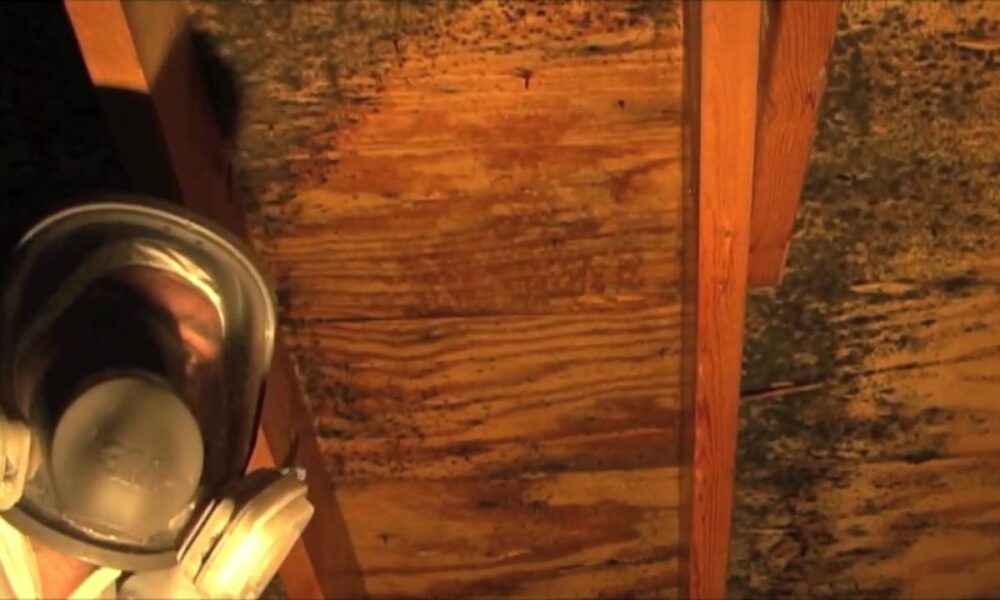
11 Questions Homeowners Ask About Crawl Space Mold Removal In Tampa Bay
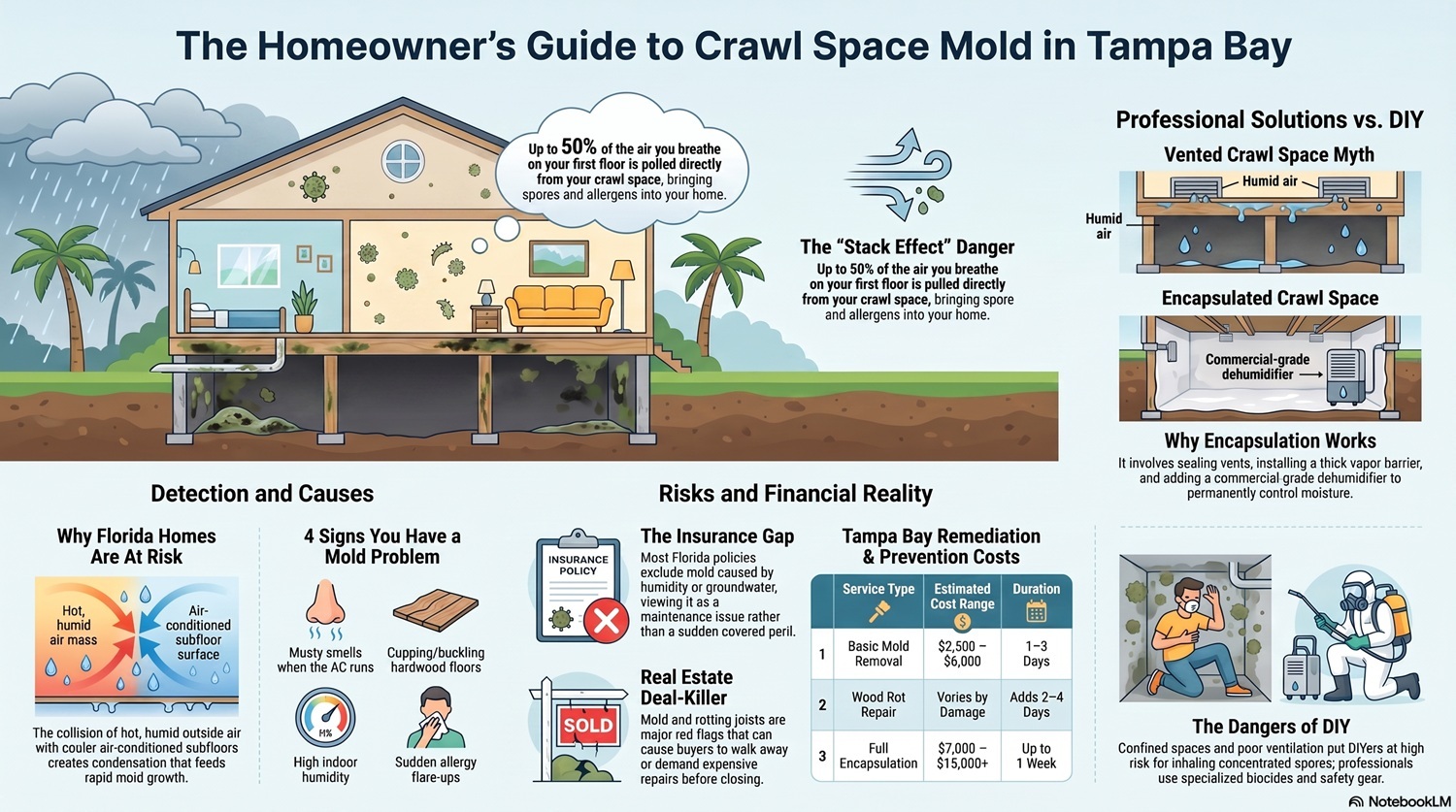
Here are 11 of the most common questions homeowners ask about crawl space mold removal specifically for the Tampa Bay area, where high humidity and a high water table create unique challenges.
1. How much does crawl space mold removal cost in Tampa Bay?
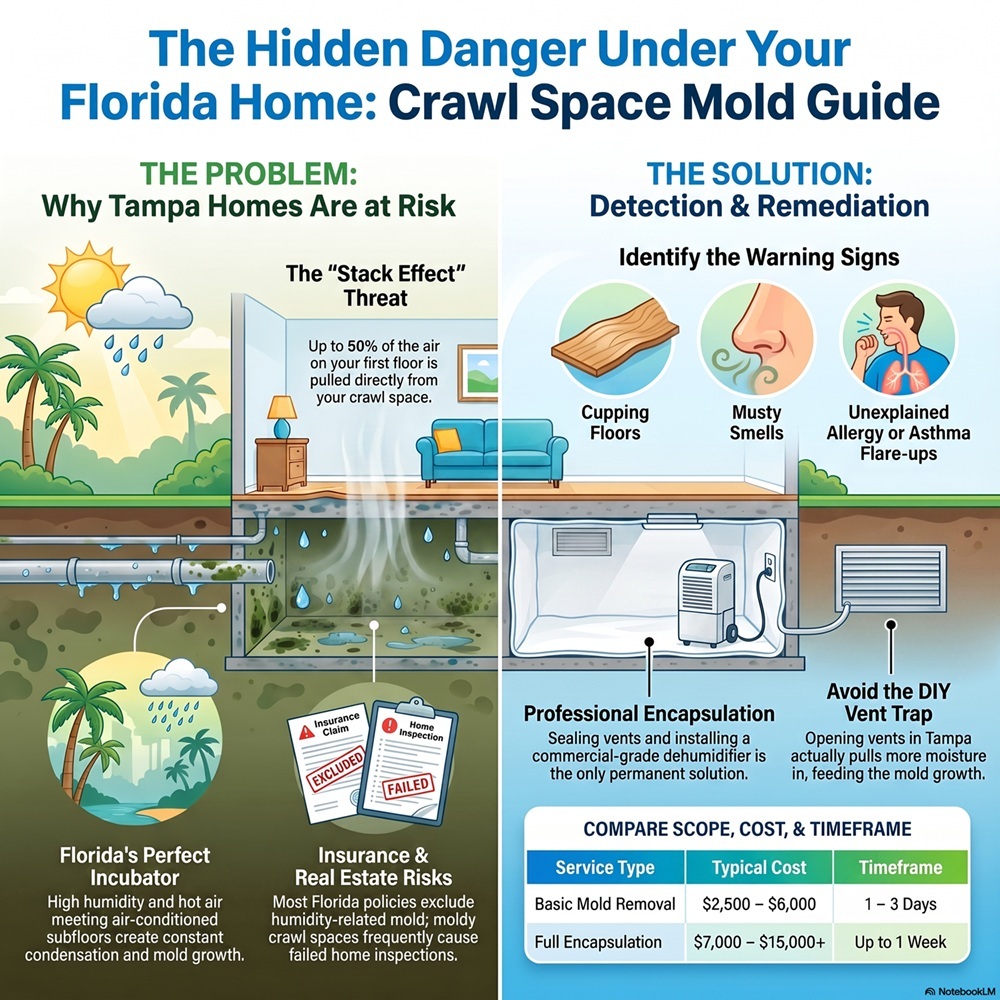
Costs typically range from $2,500 to $6,000, depending on the size of the crawl space and the severity of the infestation. If structural wood has rotted and needs replacement, or if you opt for closing a crawl space or a full encapsulation to prevent it from returning, the price can increase to $7,000–$15,000+.
2. Why does mold grow so quickly in Florida crawl spaces?
Tampa’s climate is the perfect incubator for mold. The combination of high ambient humidity, heavy summer rains, and a high water table creates constant moisture under homes. When the hot outside air meets the cooler air-conditioned subfloor of your house, condensation forms, feeding mold growth.
3. Does homeowners insurance cover crawl space mold in Florida?
Usually, no. Most standard Florida homeowners policies explicitly exclude mold damage unless it is the direct result of a covered peril, like a burst pipe or a sudden appliance leak. Mold resulting from long-term humidity, poor ventilation, or rising groundwater is generally considered a maintenance issue.
4. How do I know if I have mold without going under my Tampa Bay home?
The most common indoor signs include a persistent musty smell (especially when the AC kicks on), cupping or buckling hardwood floors, unusually high indoor humidity, and unexplained allergy or asthma flare-ups among residents.
5. Can I remove crawl space mold myself?
While you can spray surface mold with specialized biocides, DIY removal is rarely recommended for crawl spaces. It is a confined space with poor ventilation, putting you at high risk for inhaling concentrated mold spores. Furthermore, DIY methods usually only treat the symptom, not the underlying moisture issue.
6. Is closing a crawl space or encapsulation worth the cost in Tampa?
For most Tampa Bay homes with chronic moisture issues, yes. Encapsulation involves sealing the vents, laying down a thick vapor barrier on the ground and walls, and installing a dedicated dehumidifier. It is the most effective way to permanently stop mold from returning in Florida’s humid climate.
7. Does mold in my crawl space affect the air I breathe inside?
Yes. Due to the “stack effect,” up to 50% of the air on your first floor gets pulled up from the crawl space. If your crawl space is filled with mold spores and high humidity, that air is continuously drawn into your living areas.
8. Should I open my crawl space vents to dry it out?
No. In Tampa Bay, opening vents actually makes the problem worse. Because the outside air is almost always humid, opening the vents just pulls more moisture under the house, which then condenses on the cooler floor joists and feeds the mold.
9. Do I need a dehumidifier in my Tampa Bay crawl space?
If your crawl space is encapsulated, a commercial-grade dehumidifier is strictly required to regulate the moisture levels. Standard residential dehumidifiers usually aren’t powerful enough to handle the volume of air or the continuous moisture load in a Florida crawl space.
10. How long does the crawl space mold remediation process take?
The actual removal and cleaning usually take 1 to 3 days. However, if you are adding encapsulation, repairing wood rot, or installing a drainage system (like a sump pump or French drain), the entire project may take up to a week.
11. Will a moldy crawl space fail a home inspection in Tampa Bay?
Yes. Mold, standing water, or rotting joists in a crawl space are major red flags during a real estate transaction. Buyers will often demand full remediation and encapsulation before closing, or they will walk away from the deal entirely.